Here are some of my projects
Chat D
An LLM powered chatbot with additional capabilities like solving your low level design problems.
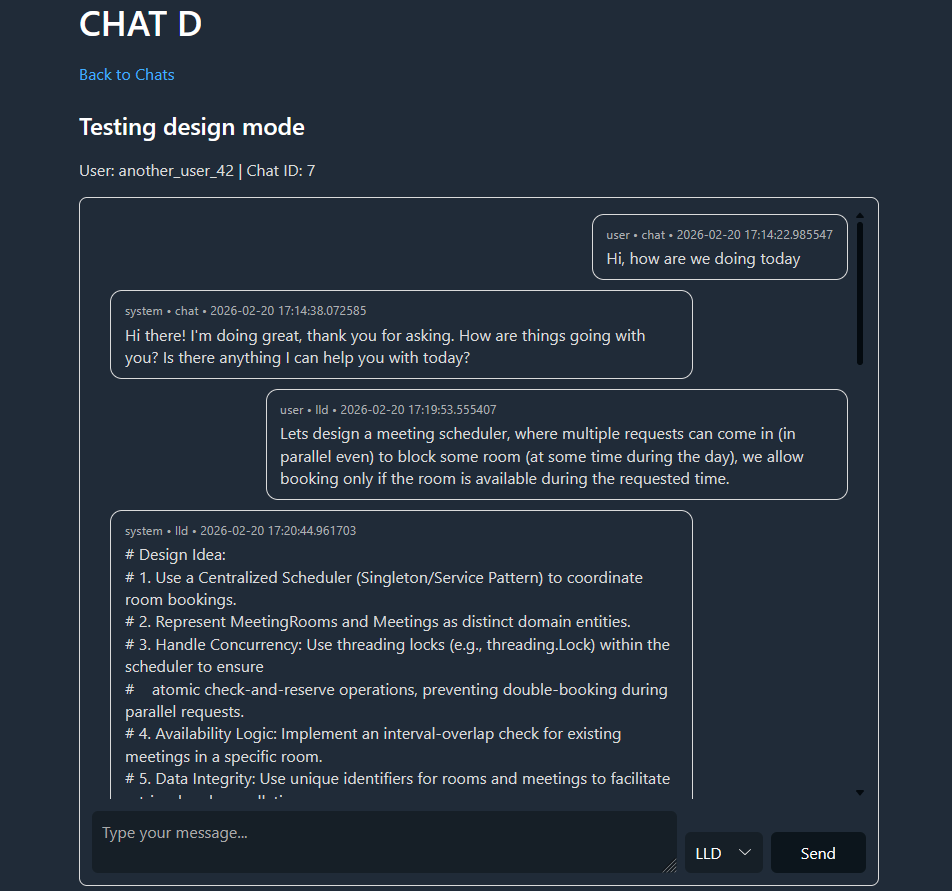
LLM powered chatbots with agentic capabilities are everywhere these days.
Things which I was particularly interested in were the syntactic correctness and the safety of the LLM generated code.
The application has a very lightweight UI client and backend server (wrapping over Gemini API). The backend also
exposes a basic python parser, which uses python's `compile()` and some
additional logic to validate and type check LLM generated code snippets.
Technologies Used - Python, FastAPI, HTMX, Water.css, Gemini API
Source code isn't public (yet)
Yet Another Kilo
A terminal based text editor with zero external depedencies
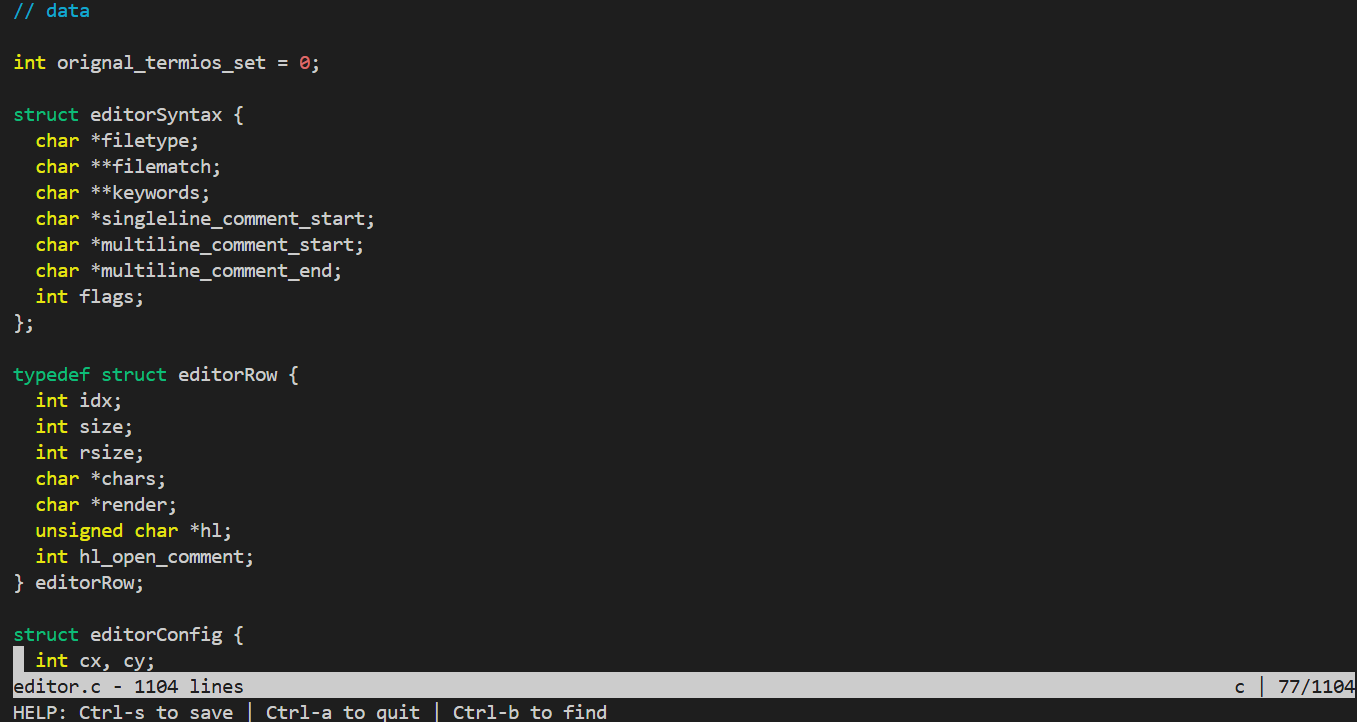
This editor has been inspired by -
the "kilo" text editor.
Apart from the basic viewing and editing operations,
kilo also supports basic syntax highlighting and searching.
So far, this "Yet Another Kilo" implementation extends
a bit on syntax highlighting and improves searching.
While this project is not a clone/fork (in context of Git), most
of the code for this editor is from snaptoken's kilo. My intention behind trying this
out was to experience the challanges involved in directly interacting with the terminal
and to try some more of the good old C (98).
Technologies Used - C
You can check out the source code on -
GitHub
Anon Stats X
Flex Twitter / X followers from your anonymous accounts onto your main account
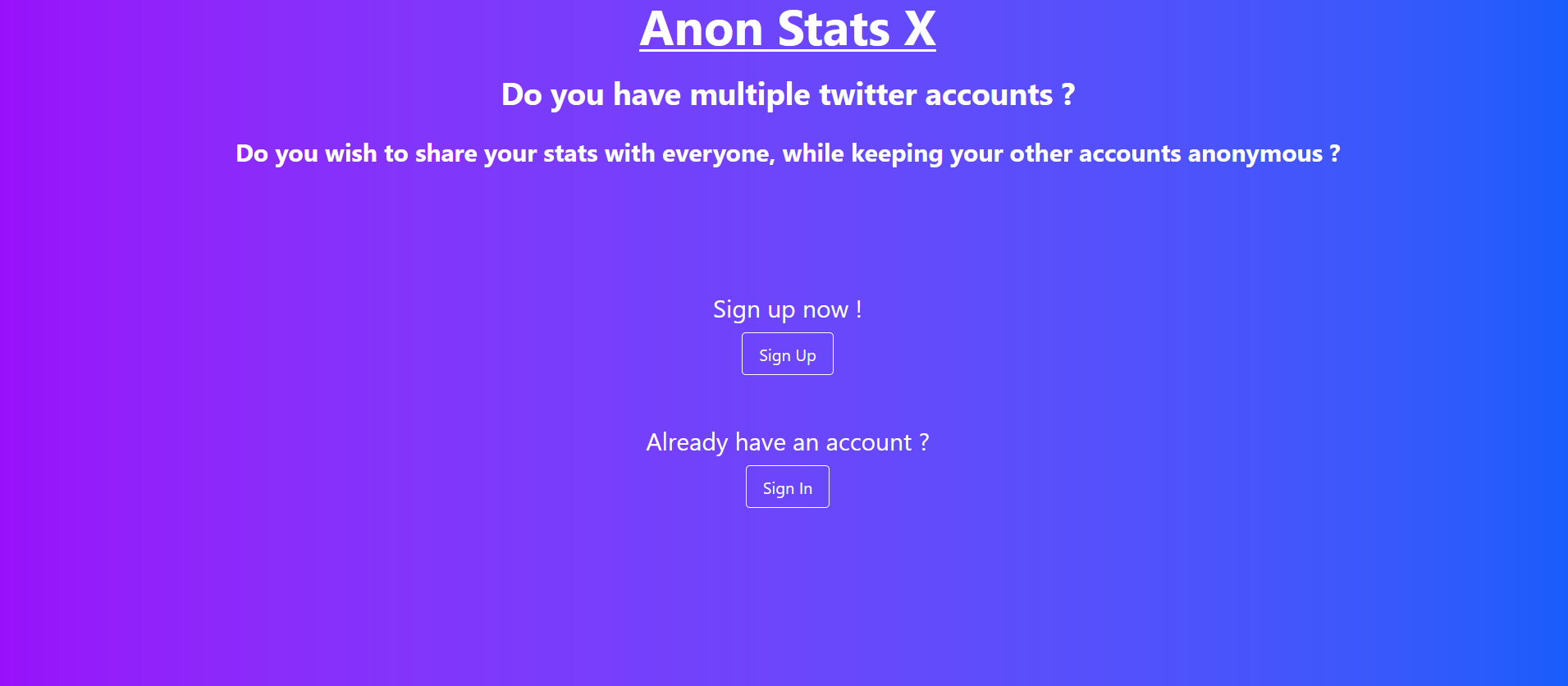
It's common for social media users to have anonymous accounts. Well some platforms
see it more than others. This project is a prototype of a simple idea, why not flex
stats from your anon accounts onto your main accounts.
We allow users to link multiple
X / Twitter accounts, every account has a publicly accessible web page, owner of the
account can decide what stats (experimented with just followers) shall be displayed
(aggregated from the selected accounts they own).
It was a fun little experiment where I got to implement a custom auth flow and
take care of the things accross the stack.
Technologies Used - NestJS, Angular, PostgreSQL, OAuth, JWT
Source code isn't public (yet)